
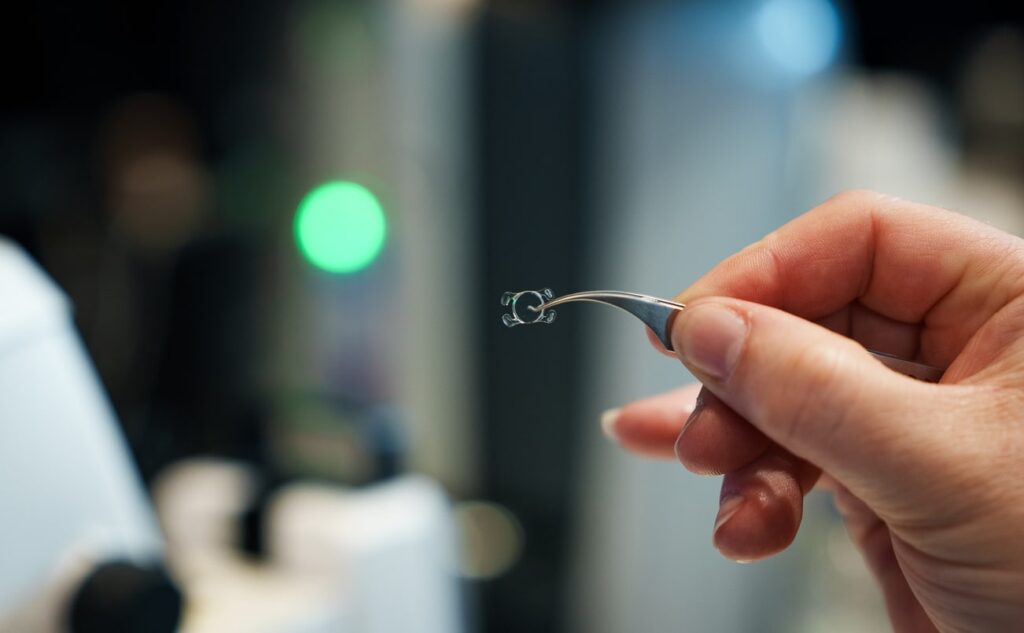
An intraocular lens, or IOL, is designed to remain in the eye after cataract surgery, but in some cases the lens may later need to be repositioned, replaced, or reconstructed. Problems can develop if an implant shifts, becomes unstable, does not provide the expected visual result, or is affected by trauma or changes inside the eye. Intraocular lens exchange or reconstruction can restore a more stable lens position and improve visual function when an existing implant no longer works as intended.
Steven B. Siepser, M.D., F.A.C.S., has extensive experience managing intraocular lens conditions and implant complications at Siepser Eyecare in Wayne, PA. His background in complicated cataract surgery, eye trauma reconstruction, and advanced intraocular procedures is especially valuable when a previous lens implant requires more complex correction.
Why Might an Intraocular Lens Need to Be Repaired or Replaced?
Most IOLs function well for many years, but complications can occasionally develop after cataract surgery or eye trauma.
Your provider may recommend further evaluation if there is:
- A dislocated or decentered lens
- Blurry or distorted vision
- Double vision in one eye
- Glare or halos that remain significant
- An incorrect or poorly tolerated lens power
- Damage to the structures supporting the implant
- Lens instability after trauma
- Complications from previous eye surgery
Some problems can be corrected by repositioning the existing lens, while others may require removal and replacement.
What Is an IOL Exchange?
An IOL exchange involves removing an existing intraocular lens and replacing it with a different implant. This may be considered when the original lens is damaged, poorly positioned, or no longer providing an acceptable visual result.
The replacement lens is selected based on the eye’s condition, remaining support structures, prescription needs, and surgical history.
In some cases, the new lens can be placed in the same location as the original implant. In others, a different fixation technique may be needed if the capsule or other supporting tissue has been damaged.
What Does IOL Reconstruction Involve?
Reconstruction may be necessary when the problem is not limited to the lens itself. Trauma, previous surgery, or implant instability can affect the capsule, iris, or other structures that normally support the IOL.
Depending on the situation, treatment may involve:
- Repositioning the existing lens
- Securing the lens with sutures or another fixation method
- Replacing the lens with a different type of implant
- Repairing damaged iris or support tissue
- Combining lens reconstruction with another eye procedure
The exact approach is highly individualized because each affected eye’s anatomy can differ.
How Is the Right Treatment Plan Chosen?
Before surgery, your provider will evaluate the position of the current lens, the condition of the cornea and retina, the health of the iris, and the amount of support available inside the eye.
Previous operative records can also be helpful when available. The goal is to understand why the implant is causing problems and choose the safest way to restore stability and visual function.
In some cases, the best option is to leave the existing lens in place and correct another problem instead. A detailed examination helps avoid unnecessary surgery.
What Is Recovery Like After IOL Exchange or Reconstruction?
Recovery varies depending on how extensive the procedure is and whether the provider repairs additional structures at the same time.
Patients may experience temporary blurry vision, light sensitivity, redness, or mild irritation. Prescription eye drops and temporary activity restrictions are commonly part of recovery.
Follow-up visits allow your provider to monitor lens position, eye pressure, inflammation, and healing. Vision may continue improving as swelling decreases and the eye adapts to the repaired or replacement lens.
Why Choose Siepser Eyecare for Intraocular Lens Exchange / Reconstruction?
Lens exchange and reconstruction can be much more complex than routine cataract surgery, especially when the capsule, iris, or other supporting structures are damaged. Steven B. Siepser, M.D., F.A.C.S., has more than 40 years of experience in complicated cataract surgery, intraocular lens conditions, implant complications, and traumatic eye reconstruction.
That combination of experience is especially valuable for patients who have already undergone eye surgery and now need a corrective procedure. Dr. Siepser is known throughout the Philadelphia region for taking on challenging cases that may require customized surgical planning. Patients also receive ongoing follow-up through the Siepser Eyecare team in Wayne as the repaired eye stabilizes.
Explore IOL Exchange and Reconstruction in Wayne, PA
A displaced, unstable, or poorly functioning lens implant can affect both visual quality and everyday comfort. Siepser Eyecare provides evaluation and advanced surgical planning for patients who may need intraocular lens exchange or reconstruction in Wayne, PA. Call (610) 265-2020 to schedule a consultation and discuss the most appropriate next step for your lens implant.