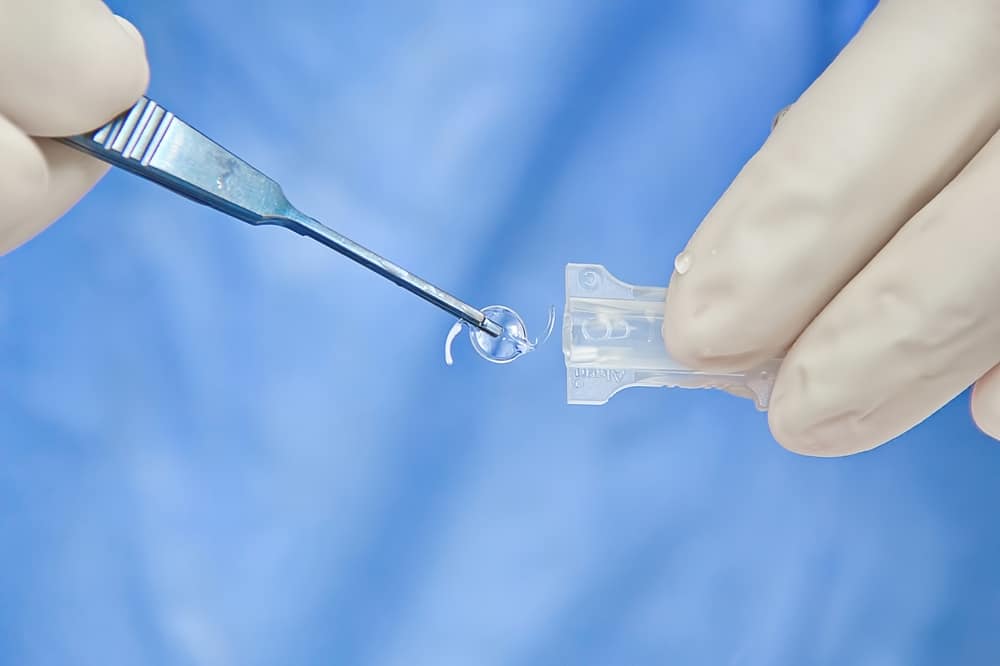
Some patients want clearer vision without relying as much on glasses or contact lenses but aren’t ideal candidates for laser vision correction. Refractive lens exchange can offer another option. Also known as clear lens extraction, this procedure replaces the eye’s natural lens with an artificial intraocular lens to improve focus and address refractive errors.
At Siepser Eyecare in Wayne, PA, Steven B. Siepser, M.D., F.A.C.S., has extensive experience with cataract surgery, intraocular lenses, refractive correction, and complex lens-related cases. His background is especially valuable when deciding whether refractive lens exchange makes sense for a patient whose age, prescription, corneal anatomy, or visual goals may make LASIK or PRK less suitable.
What Is Refractive Lens Exchange?
Refractive lens exchange is a surgical vision correction procedure that removes the eye’s clear natural lens and replaces it with an artificial intraocular lens, or IOL. Because the procedure replaces the natural lens before a cataract develops, it is sometimes called clear lens extraction.
The goal is to change the eye’s focusing power and reduce dependence on corrective lenses. Refractive lens exchange uses a technique similar to cataract surgery, but it is performed primarily to correct vision rather than remove a cloudy lens.
Depending on the lens selected, treatment may address:
- Nearsightedness
- Farsightedness
- Astigmatism
- Age-related changes in focusing ability
Who May Be a Good Candidate for Refractive Lens Exchange?
Refractive lens exchange may be considered for adults who want surgical vision correction but are not well suited to corneal procedures such as LASIK or PRK.
It can be especially relevant for patients with stronger prescriptions, thinner corneas, or age-related near vision changes. Candidacy depends on overall eye health and the patient’s expectations for distance, intermediate, and near vision.
A detailed evaluation helps assess the cornea, retina, natural lens, prescription, and other factors before recommending surgery.
How Is Refractive Lens Exchange Different From Cataract Surgery?
The procedures are very similar from a surgical standpoint. In both cases, surgeons remove the natural lens and replace it with an artificial lens implant.
The main difference is the reason for the surgery. Cataract surgery removes a cloudy lens that is affecting vision. Refractive lens exchange replaces the cloudy lens with a clear one to improve refractive error and reduce dependence on glasses or contact lenses.
Because the natural lens is removed during refractive lens exchange, that eye cannot later develop a cataract.
What Lens Options Are Available?
The lens chosen during refractive lens exchange plays a major role in the type of vision a patient may achieve afterward.
A basic lens generally corrects one primary distance. Premium lens options may offer additional features, such as astigmatism correction or a broader range of vision.
The best choice depends on several factors, including eye health, prescription, lifestyle, visual priorities, and how comfortable a patient is with the tradeoffs associated with different lens technologies.
Not every lens is appropriate for every eye, which is why measurements and a detailed discussion of vision goals are important before surgery.
What Is Recovery Like After Refractive Lens Exchange?
Refractive lens exchange is typically performed one eye at a time. Vision may begin improving relatively quickly, although clarity can continue to change as the eye heals and adapts to the new lens.
Patients usually use prescription eye drops and follow temporary restrictions on rubbing the eyes, heavy lifting, swimming, and certain other activities. Follow-up visits help monitor healing, lens position, and visual progress.
Dry eye can also affect comfort and visual quality around the time of surgery. When needed, Michele Pendrak Bush, O.D., Siepser Eyecare’s dry eye specialist, can help improve ocular surface health before and after treatment.
Why Choose Siepser Eyecare for Refractive Lens Exchange?
Refractive lens exchange requires careful surgical planning because lens selection affects how vision functions after the natural lens is removed. Steven B. Siepser, M.D., F.A.C.S., has decades of experience in cataract surgery, intraocular lens conditions, refractive correction, and managing lens implant complications. He is also known for taking on challenging cases that may require more customized decision-making.
That range of expertise helps patients receive recommendations based on the eye’s overall structure and health rather than prescription strength alone. Siepser Eyecare also provides comprehensive preoperative and postoperative care in Wayne, including dry eye management when needed, helping support comfort and visual quality throughout the treatment process.
Explore Refractive Lens Exchange in Wayne, PA
Refractive lens exchange may provide another path to clearer vision for patients who are not ideal candidates for laser vision correction or who want to address multiple focusing concerns at once. Siepser Eyecare can evaluate whether clear lens extraction is appropriate based on your eye health, prescription, and visual goals. Call Siepser Eyecare in Wayne, PA, at (610) 265-2020 to schedule a consultation and discuss whether refractive lens exchange may be right for you